



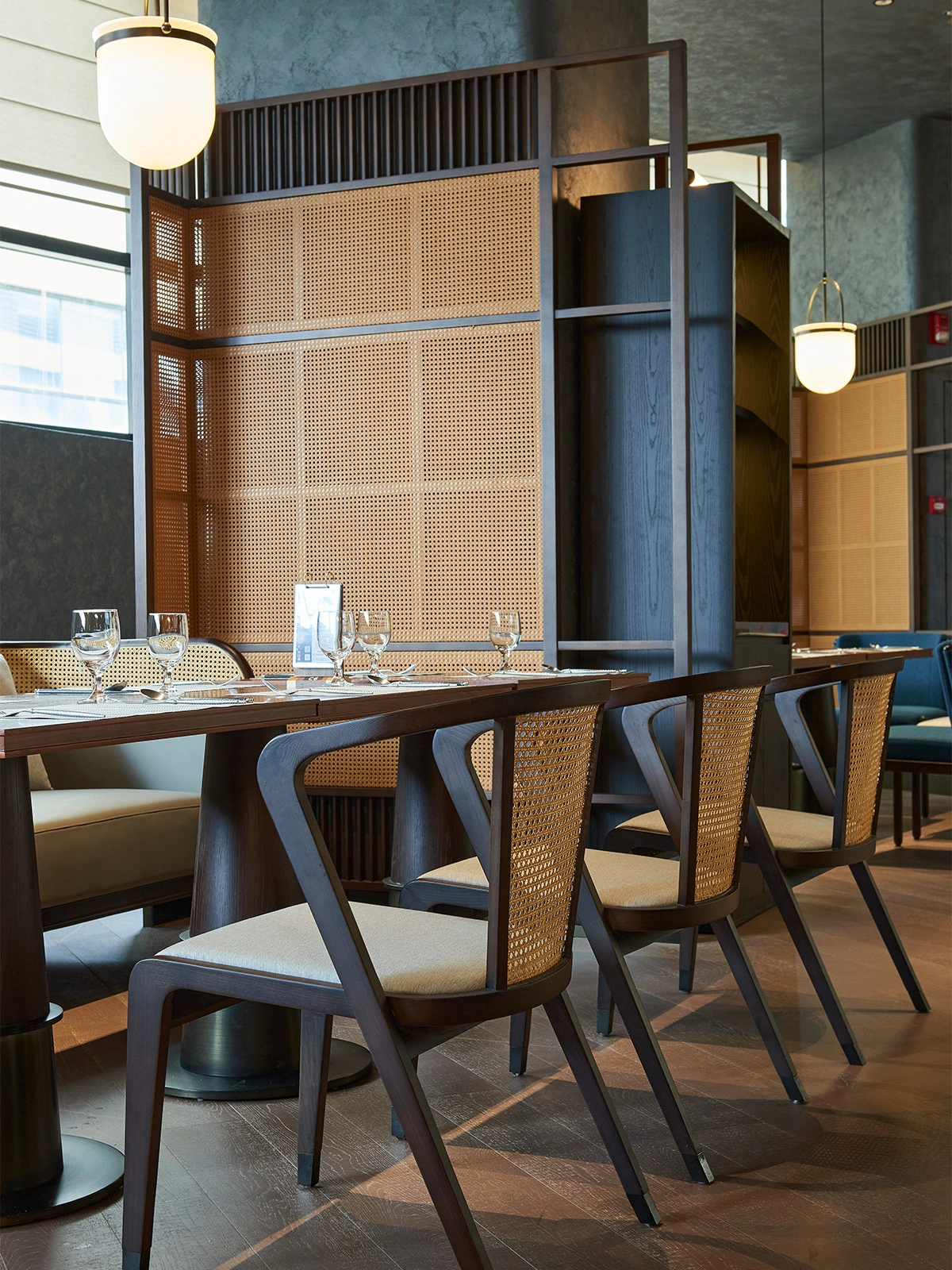
Screen Partition
Scene Value: Defines dining zones and creates semi-private areas within open layouts, adding flexibility to restaurant space management.
Design Cohesion: Translucent or solid panels feature finishes and patterns that complement wall treatments and overall interior design language.
Craft Quality: Stable freestanding or track-mounted systems ensure safety, with durable materials that maintain appearance in high-traffic areas.
Screen partition, a classic element of traditional Chinese furniture, have been given new life and function in modern high-end hotel and restaurant design.
They are not only an effective tool for dividing space and creating privacy, but also an important vehicle for enhancing the artistic style and cultural connotations of a space.
The design styles of Screen partition are extremely diverse and can be perfectly integrated with various restaurant themes.
In modern minimalist restaurants, screen designs typically use simple geometric lines and pure materials, such as metal frames paired with acrylic or plain fabrics, creating a light and transparent visual effect that both divides the space without disrupting the overall sense of openness.
For restaurants pursuing Oriental Zen or New Chinese styles, Screen partition draw more on traditional elements. Using solid wood lattices, ink-wash silk paintings, or openwork carvings with traditional patterns, they create a subtle and elegant atmosphere, perfectly showcasing the philosophical concept of "separation without complete division" in Oriental aesthetics.
In terms of style, Screen partition also exhibit rich variations. Traditional folding Screen partition, due to their flexibility and ease of storage, are still widely used today.
They can be freely unfolded or folded as needed, easily changing the spatial layout. Fixed Screen partition, on the other hand, are more often used as part of the architecture, fixed to walls or floors to form permanent spatial partitions.
The materials used in high-end hotel and restaurant Screen partition are fundamental to achieving their functionality and aesthetic value.
In terms of frame materials, solid wood is a mainstream choice. Its natural grain and warm texture bring a natural and inviting atmosphere to the space.
Through meticulous mortise and tenon joint construction and polishing, the solid wood frame is not only sturdy and durable, but also a work of art in itself.
Metal frames are more suitable for modern, industrial, or light luxury styles.
Through surface treatment processes such as electroplating, spraying, or brushing, metal frames can present a rich variety of colors and textures, such as rose gold, matte black, or antique bronze, injecting fashionable and avant-garde elements into the space.
In terms of screen panel materials, the choices are even more extensive. Woven rattan is a common form, easily creating a warm and lively atmosphere. Wooden grilles or carved panels create rich visual layers through the interplay of light and shadow.
Glass materials, such as ribbed glass, wired glass, or art glass, become ideal materials for creating a hazy, poetic space due to their unique light transmission and texture.
In addition, some Screen partition combine other materials, such as natural stone and metal mesh, creating unique visual effects and artistic value through the collision and fusion of different materials.
The functional design of Screen partition in high-end hotel restaurants revolves closely around space planning, atmosphere creation, and guest experience, and their application scenarios are highly flexible due to their different functions.
Functionally, the primary role of Screen partition is to divide space. In an open-plan restaurant layout, cleverly placed Screen partition can divide a large space into several relatively independent dining areas with different levels of privacy, such as semi-open booth areas, private dining rooms, or quiet lounge areas.
This "soft partition" method ensures the fluidity of the space while meeting the privacy needs of different guests.
Secondly, Screen partition are important visual guides and decorative elements. By painting artistic patterns on the Screen partition, carving brand logos, or using unique materials, they can become a visual focal point in the space, guiding guests' attention and reinforcing the hotel's brand image.
In terms of application scenarios, Screen partition are widely used.
In large banquet halls, Screen partition can be used to separate areas with different functions, such as the registration area, dining area, and stage area.
In private rooms of specialty restaurants or themed restaurants, Screen partition can serve as background walls, creating a strong thematic atmosphere.
In cafes or lobby bars, light and transparent Screen partition can be used to enclose relatively private "small spaces," providing guests with a quiet space for conversation or relaxation.