



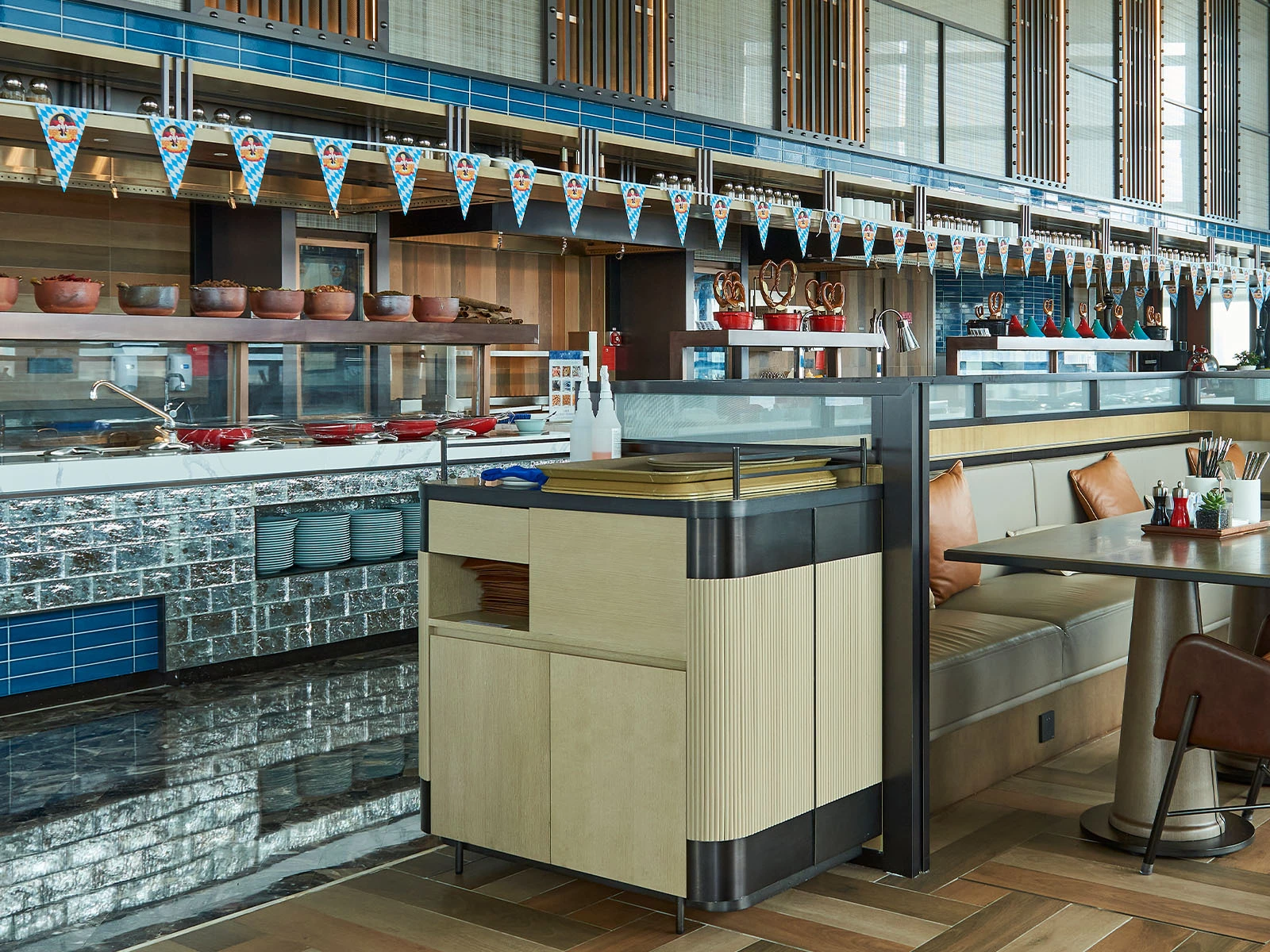
Dining Cabinet
Scene Value: Stores tableware, linens, or decor while doubling as a decorative piece, keeping the dining area organized and stylish.
Design Cohesion: Finishes and details (glass doors, open shelving) align with dining tables and chairs, complementing the overall space.
Craft Quality: Durable materials and solid joinery, with hardware that operates smoothly for long-term use.
As an important piece of furniture in high-end hotel restaurants, combining both practicality and decorative appeal, the design style and choice of sideboard are crucial in enhancing the overall aesthetics and functionality of the space.
In modern minimalist restaurants, sideboard designs typically emphasize clean lines and pure geometric forms.
Handleless flat doors, concealed storage spaces, and slender metal or solid wood legs create a light and airy visual effect, avoiding the heavy feel of traditional sideboards.
For hotel restaurants pursuing classic and luxurious styles, sideboards focus more on meticulous details and the texture of the materials.
Sideboards with exquisite carvings, vintage handles, and heavy solid wood frames can showcase a stable and grand palatial style.
In terms of style, sideboards also show a diversified trend. Traditional floor-standing sideboards provide ample storage space, suitable for restaurants that need to store a large number of tableware and utensils.
The material application of high-end hotel restaurant sideboards is key to ensuring their structural stability, durability, and aesthetics.
For the cabinet body material, multi-layer solid wood plywood is the preferred base material. This type of board is made by pressing multiple layers of thin solid wood sheets crisscrossed together, possessing excellent anti-deformation ability and stability, effectively resisting changes in temperature and humidity in the restaurant environment, ensuring that the sideboard remains undeformed and crack-free for long-term use.
In terms of surface materials, the choices are extremely rich. Solid wood veneer is a common choice; by applying thin slices of natural wood to the surface of the base material, it can present the texture and feel of natural wood, which is both beautiful and economical.
For the hardware fittings of cabinet doors and drawers, high-quality hinges and slides are crucial for ensuring smooth and quiet operation of the sideboard. This ensures that the cabinet doors and drawers remain stable and smooth even after long-term use, improving the overall user experience and product lifespan.
The functional design of high-end hotel restaurant sideboards aims to maximize the storage, display, and operational needs of the restaurant, and their application scenarios vary depending on their function.
At the functional level, the core of the sideboard is to provide ample storage space. The interior space is typically finely partitioned according to the size of tableware, utensils, and glassware, using dividers, drawers, and pull-out baskets of varying heights and widths to facilitate categorized storage and quick access and organization by service staff.
In terms of application scenarios, the design of the sideboard depends on the type and size of the restaurant.
In large buffet restaurants or banquet halls, sideboards are usually used as preparation tables or tableware collection points, and their design needs to consider the flow of people and ease of operation.
In private dining rooms of high-end Chinese restaurants or specialty restaurants, sideboards serve more of a display and decorative function.
A beautifully designed sideboard not only enhances the style and taste of the private room but also conveys the brand's story and value to guests by displaying the hotel's cultural collections or specialty wines.
In open kitchens or show kitchens, sideboards can also serve as part of the work counter, integrating storage, food preparation, and display functions, thus improving space utilization efficiency.