



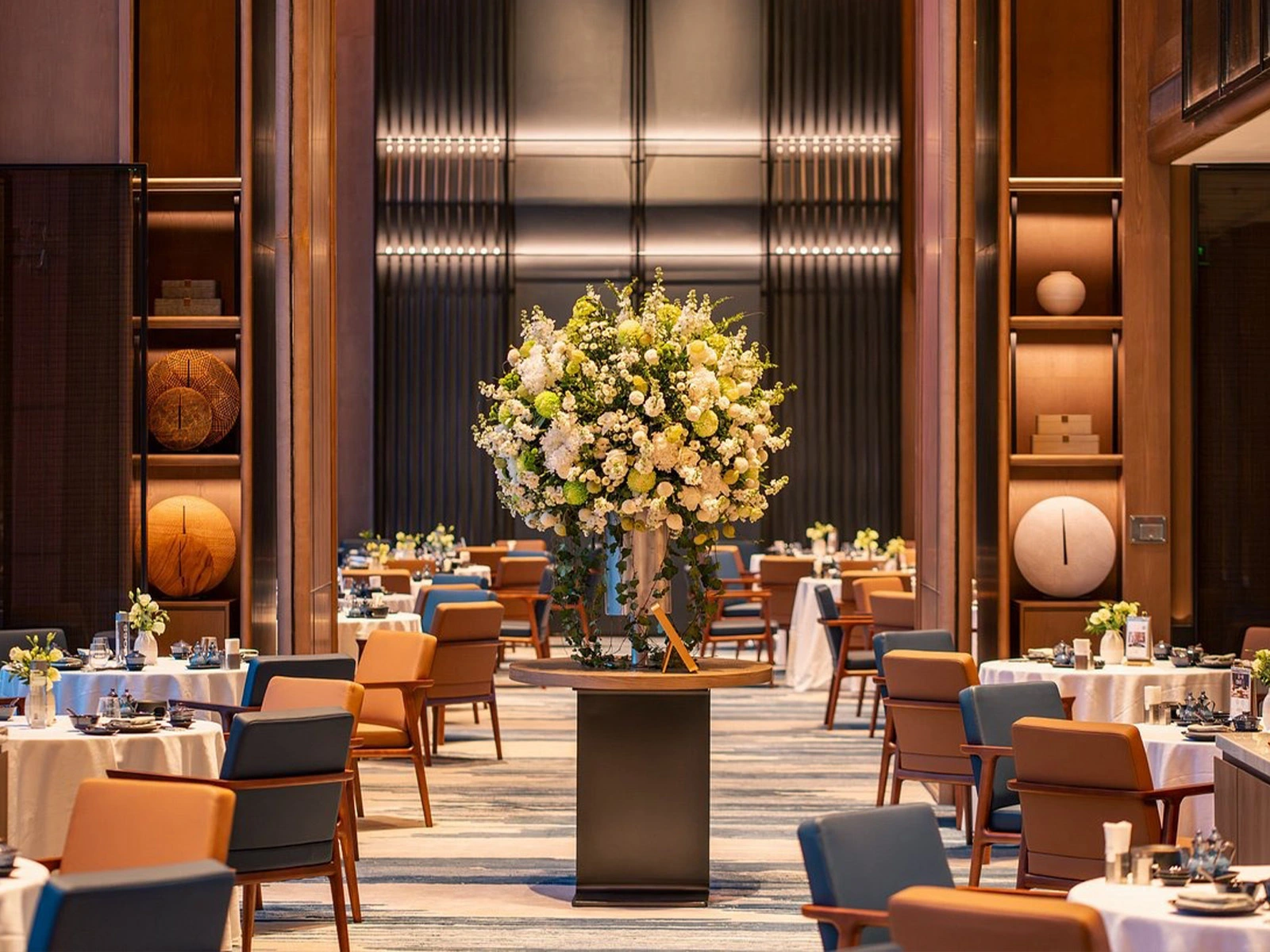
Accent Table
The decorative table, a seemingly small yet crucial element in a restaurant space, primarily functions to enhance the overall sophistication and artistic atmosphere through embellishment and decoration.
Unlike dining tables that serve the main purpose of eating, it plays the role of "space jewelry," injecting personality and highlights into the restaurant through its unique design and placement.
Decorative tables come in a wide variety of styles, complementing any restaurant theme.
In modern minimalist restaurants, decorative tables typically adopt a minimalist design language, such as slender metal frames paired with geometric tabletops, featuring clean lines and a light, elegant form. Their pure aesthetic aims to add a touch of interest and vitality to the simple space.
For restaurants pursuing a vintage or luxurious style, the decorative table can become a miniature work of sculptural art. Using solid wood bases with exquisite carvings, tabletops inlaid with marble or metal decorations, and vintage brass or ceramic handles, it can exude a strong artistic atmosphere and sense of history.
In terms of style, decorative tables also show rich variations. Side tables are usually placed against the wall, used to display table lamps, artwork, or plants, and are a common means of filling empty spaces and enriching visual layers.
Corner tables are designed specifically to utilize corner spaces, effectively improving space utilization.
In addition, there are display stands specifically designed for displaying flowers or sculptures, with their height and shape carefully designed to present the exhibits at the best angle.
The materials used in high-end hotel restaurant decorative tables are key to achieving their decorative function and reflecting quality.
In terms of tabletop materials, the choices are extremely diverse, aiming to attract attention through different textures.
Natural marble, with its unique texture and luxurious feel, is an ideal choice for enhancing the quality of decorative tables.
Sintered stone, with its rich color and texture options, and excellent physical properties, provides designers with greater creative space.
Wooden tabletops, especially those using veneers or solid wood from rare woods, can bring a warm, natural, and inviting feel to the space.
In terms of base materials, solid wood and metal are two mainstream choices. Solid wood bases, especially those with intricate carvings or unique designs, are inherently highly decorative.
Metal bases, such as those made of stainless steel, brass, or wrought iron, can be treated with different processes to present modern, retro, or industrial styles, adding rich visual layers to the decorative table.
The product advantage of decorative tables lies in their flexibility and ability to serve as a focal point.
Unlike large pieces of furniture that are difficult to move, they can be easily repositioned and redecorated according to the season, holidays, or different event themes, bringing a constantly fresh feel to the restaurant space.
A carefully selected decorative table can effectively break the monotony of a space and enhance the overall design's completeness and sophistication.
While the functional design of decorative tables in high-end hotel restaurants doesn't prioritize practicality, their presence greatly enriches the functional layers and visual experience of the space, making their application scenarios highly flexible.
On a functional level, the core of a decorative table is "decoration" and "display." It provides designers with an excellent platform to showcase the hotel's artistic taste and cultural connotations.
By placing carefully selected artworks, designer sculptures, regionally distinctive handicrafts, or exquisite floral arrangements on the decorative table, the artistic style and cultural atmosphere of the entire restaurant can be instantly elevated.