



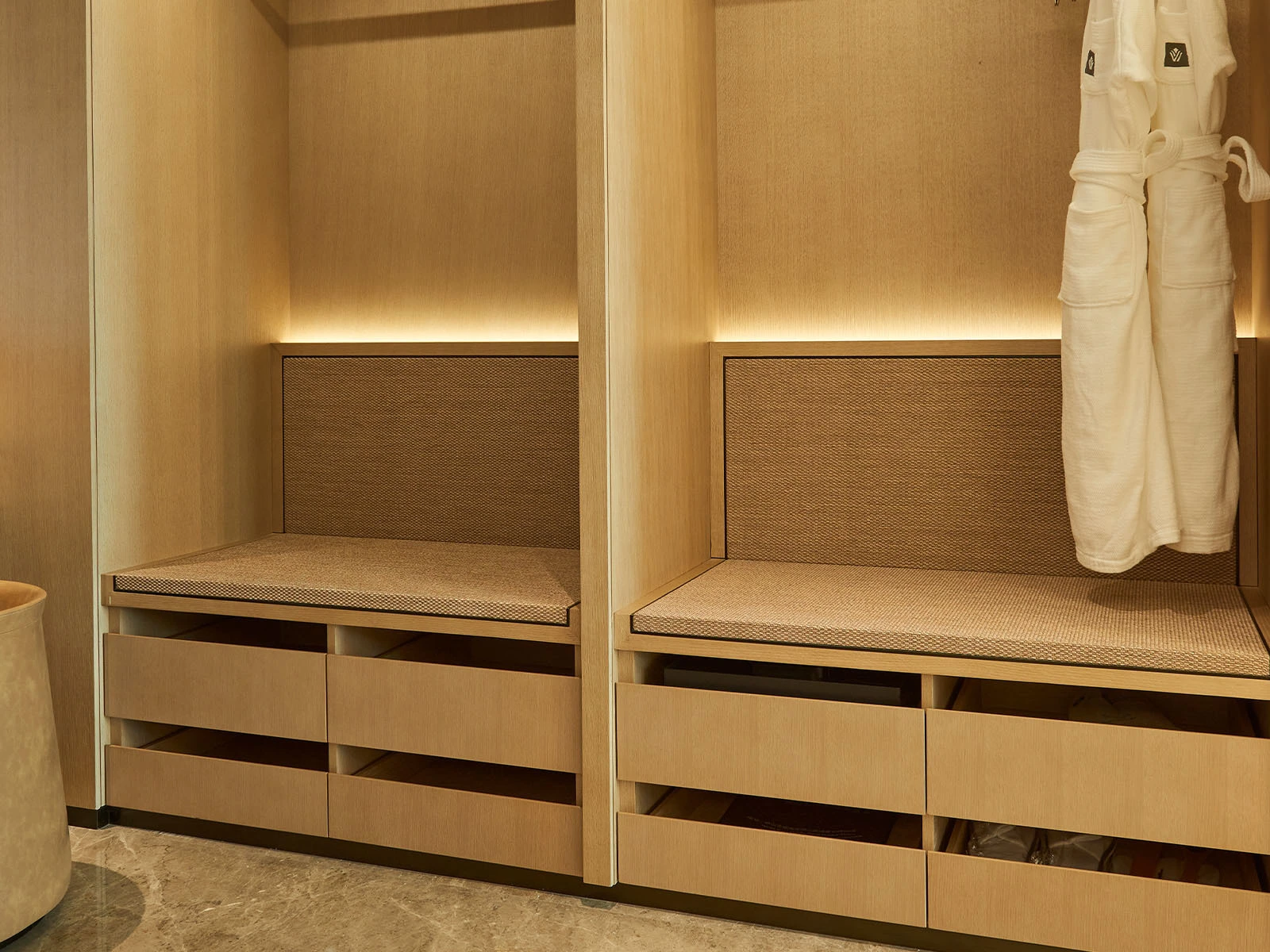
Wardrobe
Scene Value: Provides essential guest storage for clothing and luggage, with interior organization that keeps rooms tidy and functional.
Design Cohesion: Door styles and handles coordinate with room cabinetry and design theme, built flush to walls for streamlined appearance.
Craft Quality: Smooth door operation and sturdy hanging rods handle heavy use, with interior finishes that resist scuffing from luggage and hangers.
In the design context of high-end hotels, resorts, and boutique hotels, wardrobes have long transcended their simple storage function, becoming an important medium for shaping the spatial style and conveying brand aesthetics.
The core of their design philosophy lies in seamlessly integrating with the overall style of the hotel, whether it's modern minimalist, new Chinese style, light luxury, or classic European style; the wardrobe plays a role in defining the temperament of the space.
In modern minimalist style hotels, wardrobe design tends to use simple straight lines, handleless flat doors or recessed handles, creating a clean, crisp, and spacious visual experience.
Materials often include high-quality matte finishes, natural wood veneers, or decorative panels with delicate textures. Colors are mainly neutral, such as sophisticated gray, off-white, or dark brown, emphasizing the purity of the materials and the exquisite craftsmanship.
In new Chinese style hotel projects, wardrobe design incorporates more traditional elements, such as using dark-colored walnut or teak solid wood veneers, paired with simple metal or solid wood lines as decoration, or using grilles and openwork techniques in the door panel design, revealing the subtlety and elegance of Eastern aesthetics within a modern structure.
For hotels pursuing a sense of luxury, wardrobe design focuses more on the interplay of details and materials, such as using high-gloss lacquer panels paired with brushed metal frames, or selecting rare wood veneers with unique textures, complemented by exquisite metal carvings or leather upholstery. Through the interplay of light and texture, the design showcases the nobility and extraordinary quality of the space.
The durability and environmental friendliness of high-end hotel wardrobes are core standards for measuring their quality, which directly depends on the materials used and the exquisite craftsmanship.
We strictly adhere to industry standards, using multi-layer solid wood plywood that meets the national E1 standard for the main frame of the wardrobe. This material has a stable structure and strong nail-holding power, effectively resisting deformation caused by changes in environmental temperature and humidity, ensuring the long-term stability of the cabinet.
For visible surfaces, we offer a variety of options to meet the needs of different design styles. Natural wood veneers, such as North American ash, oak, and walnut, are meticulously planed and veneered to preserve the wood's natural grain and warm texture. Each panel is rigorously selected to ensure it is free of knots and cracks, and aesthetically matched to create a harmonious and unified wood grain pattern.
In addition to natural wood veneers, we also offer 0.6mm thick engineered wood veneers or 1.0mm thick B1 fire-retardant decorative panels. These materials offer excellent wear resistance, scratch resistance, stain resistance, and easy cleaning, making them ideal for high-traffic hotel environments.
For the finishing process, we use environmentally friendly water-based or UV paints, which are odorless, ensuring good indoor air quality. These paints also provide high film hardness and excellent gloss, effectively protecting the wood surface.
In the limited space of high-end hotel guest rooms, the functionality of the wardrobe directly impacts the guest experience.
Our custom wardrobe service aims to maximize storage space through scientifically and rationally designed interior layouts.
Our design team will plan diverse functional areas based on the hotel's positioning and target clientele.
As a core piece of built-in furniture in hotel guest rooms, wardrobes are used in various room types, from standard rooms to presidential suites.
In different application scenarios, the wardrobe design needs to harmonize with the overall room layout and movable furniture to create a unified and complete interior atmosphere.
In standard guest rooms, the wardrobe can be combined with a wall-mounted desk or TV cabinet to form a multi-functional wall unit that integrates storage, work, and entertainment, effectively saving space.
In suites or executive floors, the wardrobe design is more independent and spacious, potentially becoming a small walk-in closet.
In this case, the internal functional divisions of the wardrobe will be more detailed, including not only hanging and folding areas but also compartments for accessories, shoe racks, and ironing boards, meeting the needs of high-end guests for a refined lifestyle.
In terms of materials and style, the wardrobe needs to complement the movable furniture in the room, such as the bed, bedside tables, and footstools. For example, if the bed in the room has a solid walnut wood frame, then the wardrobe doors and baseboards should also be made of walnut veneer in the same color to create visual uniformity.