



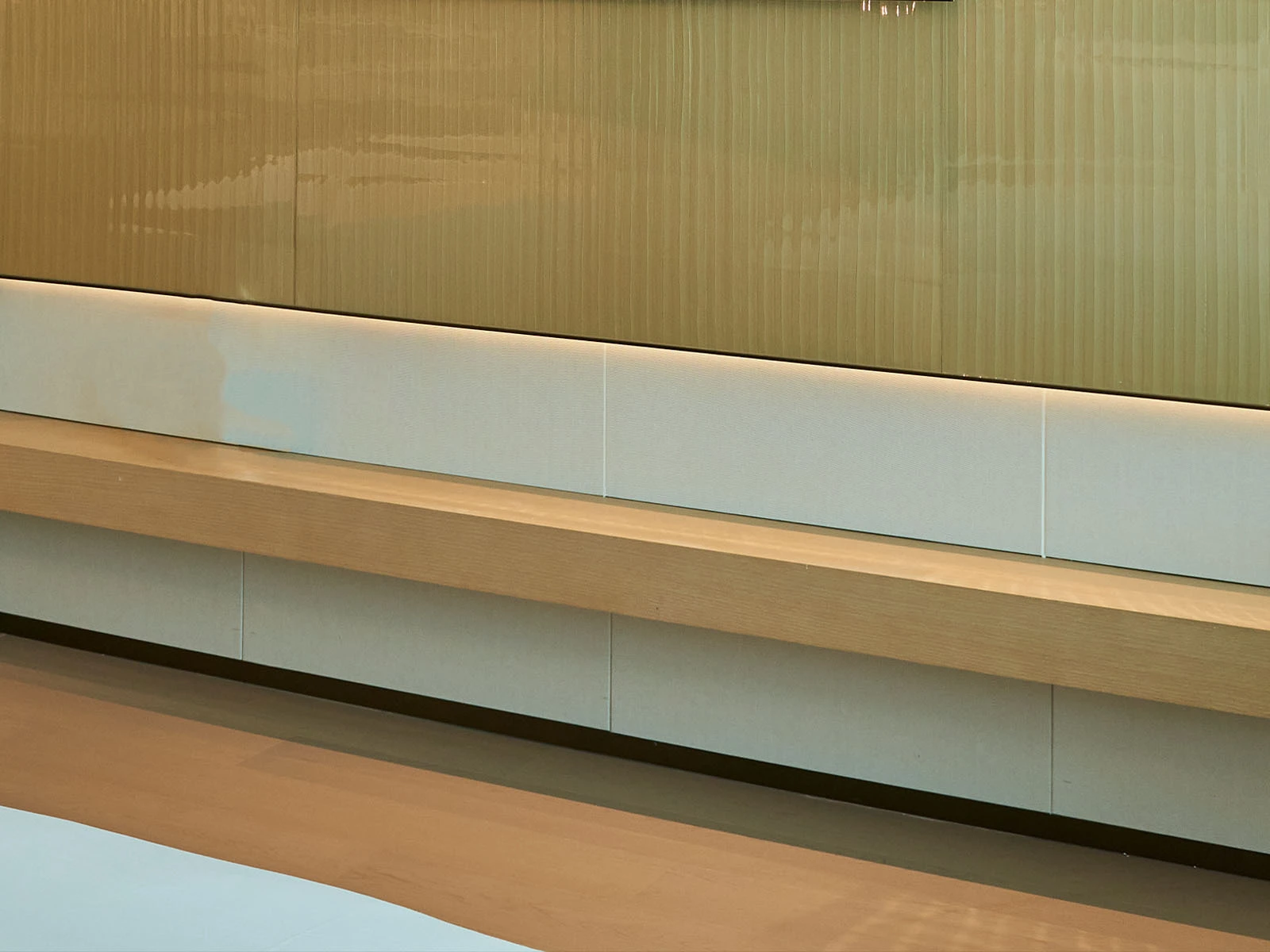
Skirting
Skirting boards, as transitional decorative elements between walls and floors, are designed to protect the walls while enhancing the overall aesthetic and sophistication of the space through the use of lines, materials, and colors.
In modern minimalist styles, skirting boards typically feature clean, crisp lines, often narrow and tall, made of wood, metal, or PVC. The color usually matches the walls or floors to achieve visual extension and unity.
In new Chinese or light luxury styles, skirting boards can showcase craftsmanship and material details.
For example, wooden skirting boards with simple lines or carvings can be used, complemented by metal or stone trim strips. The contrast of different materials adds layers and a sense of luxury to the space.
The design of skirting boards also needs to be coordinated with surrounding elements such as door frames, wall panels, and dado rails, ensuring a harmonious and unified whole in terms of style, material, and height, collectively outlining the contours of the space.
The choice of material and craftsmanship for skirting boards needs to consider aesthetics, durability, and ease of installation.
Common materials include solid wood, MDF, PVC, metal, and stone.
Solid wood skirting boards have a warm texture and natural grain, making them a preferred choice for high-end hotels, but they require professional drying and insect-proof treatment to prevent deformation and cracking.
MDF skirting boards have a smooth surface and are easy to process, making them an ideal base material for various finishes (such as veneer and paint).
PVC skirting boards are waterproof, moisture-proof, easy to clean, and economical, suitable for damp areas such as bathrooms and kitchens.
Metal skirting boards (such as stainless steel and aluminum alloy) have a strong modern feel and good durability, often used in modern minimalist or industrial style hotels. Stone skirting boards are sturdy, durable, and easy to clean, suitable for public areas such as lobbies and corridors.
The functionality and practicality of skirting boards are mainly reflected in their ability to protect walls, conceal gaps, and beautify the space.
In hotel guest rooms and public areas, luggage, trolleys, and cleaning equipment can easily scratch and bump the bottom of the walls. Skirting boards can effectively resist these external forces, preventing wall damage and reducing hotel maintenance costs. Secondly, baseboards can conceal the gaps between the wall and the floor.
Due to construction errors or thermal expansion and contraction of materials, there are usually some gaps between the wall and the floor. Baseboards can perfectly cover these gaps, making the overall effect more aesthetically pleasing.
In addition, baseboards can also conceal electrical wires or network cables. In some designs, cables can be laid in the cable channels behind the baseboards, ensuring electrical safety and maintaining a clean and tidy space.
Our custom baseboard service aims to create unique and perfectly integrated decorative details for hotels that complement the overall design style.
The advantage of our custom service lies in its high flexibility and precision.
Our design team can provide a complete customized solution for baseboards, from material selection and color matching to styling design (such as height, lines, and carvings), based on the hotel's overall style and material system.
Clients can freely choose the material, color, height, and style of the baseboards to match the room's wall panels, flooring, or door frames.
Baseboards are used in almost all interior spaces of a hotel and are a fundamental element in creating the overall spatial style.
In guest rooms, baseboards usually use the same material and color as the wall panels and door frames, forming a unified and harmonious whole.
In public areas such as lobbies, corridors, and restaurants, baseboards need to be more durable and easy to clean, so wood, metal, or stone materials are often used.
In some special areas, such as bathrooms or kitchens, baseboards need to be waterproof and moisture-proof, so PVC or stone materials are often used.
Furthermore, in some stairwells or equipment rooms, the design of the baseboards can be simpler and more functional to meet basic usage needs.